
Finding a puddle under your bathroom vanity or seeing water rise dangerously close to the rim of your basin is a headache no Singaporean homeowner wants to face. Whether you’re in a classic HDB flat or a modern condo, sink overflows and basin leaks can quickly escalate into a plumbing nightmare, causing damage to your wooden cabinets and potentially leading to water seeping into the floor screed. If left unchecked, this can result in ceiling leaks affecting your downstairs neighbors. To avoid overflows and leaks in bathroom sinks, it’s crucial to regularly inspect your plumbing system, identify potential risks early, and understand what causes these problems.
The Blueprint for a Leak-Proof Bathroom Sink
The Hidden Science of Your Sink’s Overflow System
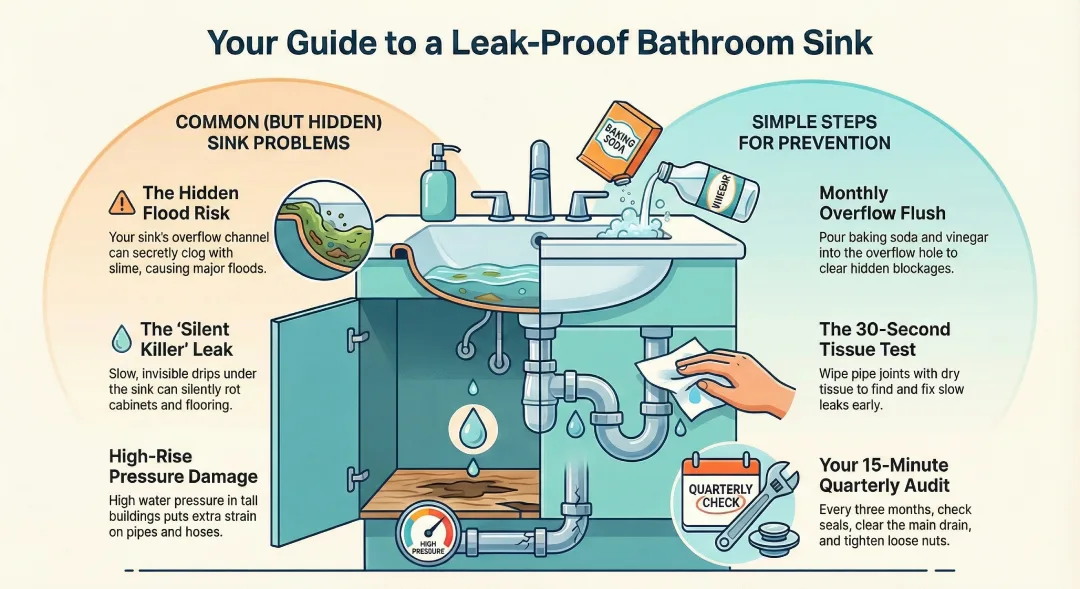
Most homeowners assume the small hole near the top of the basin is just for ventilation, but it is actually a vital safety feature. This internal channel is designed to divert water back into the main drain if the faucet is left running while the stopper is closed. However, because this path is hidden, it often becomes a breeding ground for hair, soap scum, and biofilm. When this channel blocks up, a simple “accident” turns into a flood because the water has nowhere to go but onto your floor. To ensure your sink overflow leaks don’t happen, you need to maintain this “secret” passage just as much as the main drain.
Critical Strategies to Prevent Sudden Bathroom Sink Overflows
The best way to handle a flood is to make sure it never starts. In Singapore’s high-pressure water systems, a faucet can sometimes output water faster than a standard drain can carry it away. You can manage this risk by adjusting your habits and your hardware.
- Install Flow Restrictors: Using a high-quality aerator on your tap limits the volume of water without sacrificing pressure, giving your drain more time to keep up.
- The Five-Second Test: Periodically fill your sink and then pull the plug. If the water takes more than five seconds to clear the basin, you likely have a developing sink choke that needs professional attention.
- Stopper Awareness: Mechanical pop-up stoppers are famous for catching hair. If yours feels “mushy” or slow to move, it’s already holding onto debris that will eventually cause an overflow.
How to Keep Your Bathroom Sink Overflow Clean and Functional
Because the overflow channel is rarely used, the water inside stays stagnant, leading to “black slime” or mold. A blocked overflow is a primary cause of bathroom sink overflow leaking because the water pressure forces its way through the gaskets instead of down the pipe. You can keep this area clear by using a flexible bottle brush or a simple funnel. Pouring a mixture of baking soda and white vinegar into the overflow hole once a month creates a foaming action that breaks down organic matter. This simple habit ensures that if you ever do leave the tap running, the safety system is ready to do its job.
Proactive Leak Prevention: Moving Beyond the Visible Fixtures
A basin leaking water often starts at the connection points you cannot see. In the tropical humidity of Singapore, metal components like chrome-plated brass can corrode faster than expected. You should regularly check the “tailpiece”, the pipe that connects the sink drain to the P-trap. If you see “white crust” or green oxidation around the nuts, the seal is failing. Replacing these sink pipes early is much cheaper than waiting for a pipe to burst and soak your entire bathroom.
The Anatomy of a “Zero-Leak” Basin Assembly
To truly avoid leaks, you must understand the four critical “fail points” in a standard basin setup. If any of these are compromised, you will eventually see water pooling in your vanity.
| Component | Common Failure Reason | Prevention Method |
| P-Trap / Bottle Trap | Debris buildup causing pressure on seals. | Quarterly unscrewing and cleaning of the trap. |
| Supply Hoses | High water pressure causing braided steel to fray. | Replace every 5 years; check for “kinks.” |
| Basin Gasket | Dried-out rubber under the drain flange. | Ensure proper toilet sink installation with fresh silicone. |
| Faucet Mounting | Loose nuts allowing water to seep under the tap. | Hand-tighten mounting bolts if the tap wobbles. |
Diagnostic Precision and Singapore-Specific Plumbing Risks
The “Silent” Leak: Detecting Issues Before They Become Disasters
A basin leak is not always obvious. Sometimes, water does not spray out in a visible fountain; instead, it drips slowly behind the pedestal or inside the vanity cabinet. To catch these “silent killers,” you should perform a “dry-wipe test.” Take a piece of dry toilet tissue and run it along the underside of the basin, the supply valves, and every joint of the P-trap. If the paper shows even a tiny damp spot, you have found a slow leak that is currently being absorbed by your wooden cabinets.
This is particularly important for HDB residents, as the wood used in many standard vanities is prone to swelling and mold growth when exposed to constant moisture. Early detection allows for a quick sink pipe repair before the structural integrity of your bathroom furniture is compromised.
Technical Gap: Managing Water Pressure in Singapore High-Rises
Many homeowners don’t realize that the height of their floor significantly impacts their plumbing health. In many Singaporean high-rise buildings, the water pressure on lower floors can be much higher than on the upper levels due to gravity. This high hydrostatic pressure puts immense strain on the rubber gaskets and flexible hoses of your sink.
If your water “slams” when you turn the tap off (a sound known as water hammer), your pipes are taking a beating. Installing a Pressure Reducing Valve (PRV) or simply ensuring your stop-cocks are not opened to their absolute maximum can prevent a basin leaking water from the supply lines. Maintaining steady pressure is one of the most effective ways to extend the lifespan of your fixtures and avoid sudden pipe bursts.
P-Trap vs. Bottle Trap: Choosing the Right Guard for Your Basin
In Singapore, most HDB and condo bathrooms use either a P-trap or a bottle trap to prevent sewer gases from entering the home. While these are essential for hygiene, they are also the most common site for a basin leak.
- Bottle Traps: These are compact and look great in modern “floating” basins, but they have more internal corners where debris can settle.
- P-Traps: Generally offer a smoother flow but take up more space. Regardless of which one you have, the seals at the top and back of the trap are under constant pressure. If you notice a damp smell or a slow drip, the internal “O-ring” has likely perished. Regularly clearing these traps prevents back-pressure, which is a leading cause of sink overflow leaks and drainage failure.
The Importance of Material Integrity: PVC, Copper, and Stainless Steel
The materials used in your plumbing play a massive role in how often you face repairs. While PVC is common for waste pipes because it doesn’t rust, the supply lines are usually copper or stainless steel. In our humid climate, copper pipes can develop “green rot” or oxidation at the joints. If you see this discoloration, it means the metal is thinning. Professional water pipe leak repair often involves replacing these sections with more durable PPR or modern stainless steel to ensure the system can handle the rigors of daily use without failing. Choosing the right material during a renovation is a long-term investment in your home’s safety.
HDB Plumbing Standards and Compliance
When dealing with a basin leaking water, it is important to follow local regulations. HDB has specific guidelines regarding the types of pipes and fittings that can be used, as well as who can perform the work. Using uncertified parts or DIY solutions that don’t meet PUB standards can lead to issues with your home insurance if a flood occurs.
A professional plumber ensures that every connection is “water-tight” and compliant with Singapore’s strict water service requirements. This level of expertise is what separates a temporary “patch-up” from a permanent solution that keeps your bathroom dry for years to case.
Maintenance Mastery and Professional Solutions
The Quarterly Maintenance Calendar: A Sink Audit for Singaporeans
To truly prevent a basin leak or unexpected sink overflow leaks, you cannot rely on luck. Creating a regular habit of inspection is the only way to avoid emergency repair costs. Every three months, you should dedicate fifteen minutes to a “sink audit.” Start by checking the silicone sealant around the rim of your basin; in our tropical climate, silicone can peel or develop mold, allowing water to seep behind the sink and rot your vanity.
Next, clear the wash basin drain of any accumulated hair or soap scum using a simple plastic zip-tie or drain snake. Finally, tighten any mounting nuts that may have vibrated loose over time. This quarterly check ensures that minor issues are caught before they turn into a bathroom sink overflow leaking crisis that requires a total fixture replacement.
Regularly inspecting your pipes and fittings, particularly for leaks or corrosion, is vital to maintaining a functional plumbing system. Ensuring plumbing system maintenance and water quality standards can help prevent serious issues and extend the life of your system.
DIY vs. Professional Intervention: Knowing Your Limits
While cleaning a bottle trap or wiping down pipes is a great DIY task, certain basin leaking water scenarios require the specialized tools of a professional. If you notice water seeping from the wall behind your sink, or if your drain continues to gurgle even after you have cleared the P-trap, the issue likely lies deep within the main stack.
Attempting to fix a complex leak without the right experience can lead to cross-threading pipes or damaging expensive porcelain fixtures. For a guaranteed fix that meets HDB and PUB standards, it is best to rely on professional plumbing services for any concealed pipe issues or full toilet sink installation. A licensed plumber can also provide a proper diagnostic report, which is essential if you need to make an insurance claim for water damage.
Expert Tips for Long-Term Leak Prevention
Beyond the pipes themselves, the accessories you choose can make a massive difference in your plumbing longevity.
- Switch to Quality Aerators: A high-quality faucet aerator does more than just save water; it stabilizes the stream, preventing “splash-back” that often causes water to pool on the counter and leak into the cabinet below.
- Avoid Harsh Chemicals: Store-bought liquid drain cleaners are often highly corrosive. Over time, they eat away at the rubber seals and PVC joints, eventually causing a basin leak. Use natural solutions like vinegar and baking soda instead.
- Monitor Your Utility Bill: If your SP Group bill shows a sudden spike in water usage but your habits haven’t changed, you likely have a hidden leak. This is your cue to call for a professional inspection immediately.
Final Thoughts: Stay Ahead of the Puddle
A dry bathroom is the foundation of a healthy, comfortable home. By understanding the anatomy of your sink, keeping the overflow channel clean, and respecting the high water pressure common in Singapore’s high-rises, you can effectively stop basin leak problems before they start.
Remember, the cost of a quick maintenance check is nothing compared to the price of replacing water-damaged flooring or resolving a dispute with a neighbor over a ceiling leak. If you ever find yourself facing a stubborn bathroom sink overflow leaking or a pipe that just won’t stay dry, our team at LS Plumber Singapore is ready to help with efficient, reliable service.
Frequently Asked Questions: Avoid Overflows and Leaks in Bathroom Sink
Why does my sink overflow even when the drain is open?
This usually happens because the air-venting system in your pipes is blocked. If air cannot escape the drain line, it creates an “airlock” that pushes water back up. This requires a professional to clear the vent or the main stack.
How often should I clean my bathroom sink overflow hole?
You should clean it at least once every six months. Use a funnel to pour a mix of baking soda and vinegar down the hole to kill mold and break down the “black slime” that causes sink overflow leaks.
Can a cracked porcelain sink be repaired?
Small hairline cracks can sometimes be filled with waterproof epoxy, but for a permanent and safe solution, a full wash basin replacement is recommended to prevent a sudden collapse or major leak.
What is the best way to detect a hidden basin leak?
The “Tissue Test” is the most effective. Wipe all pipes dry, then wrap a piece of toilet tissue around each joint. If the paper becomes damp or changes texture, you have found a slow leak that needs tightening or a new gasket.