
Water pressure issues can be one of the most frustrating plumbing problems to deal with in your home. Whether you’re struggling with a weak shower, a dripping faucet, or a sink that takes forever to fill, low or high water pressure can affect your daily life in many ways. Pressure issues often stem from various factors, such as types of pipes used in your plumbing, flow restrictions, or issues with your home’s water supply. The velocity of water and pressure gauges can help determine if your home’s water pressure is good, bad, or average. But the good news is, most water pressure problems can be identified and fixed without much hassle.
Why Is Water Pressure Important?
Water pressure is the force that pushes water through your pipes and fixtures. It’s measured in pounds per square inch (psi) and is vital for ensuring that your plumbing system works effectively. When the water pressure is too high or too low, it can cause problems with your faucets, showers, and even appliances that rely on water flow, like washing machines and dishwashers.
What would be the ideal water pressure?
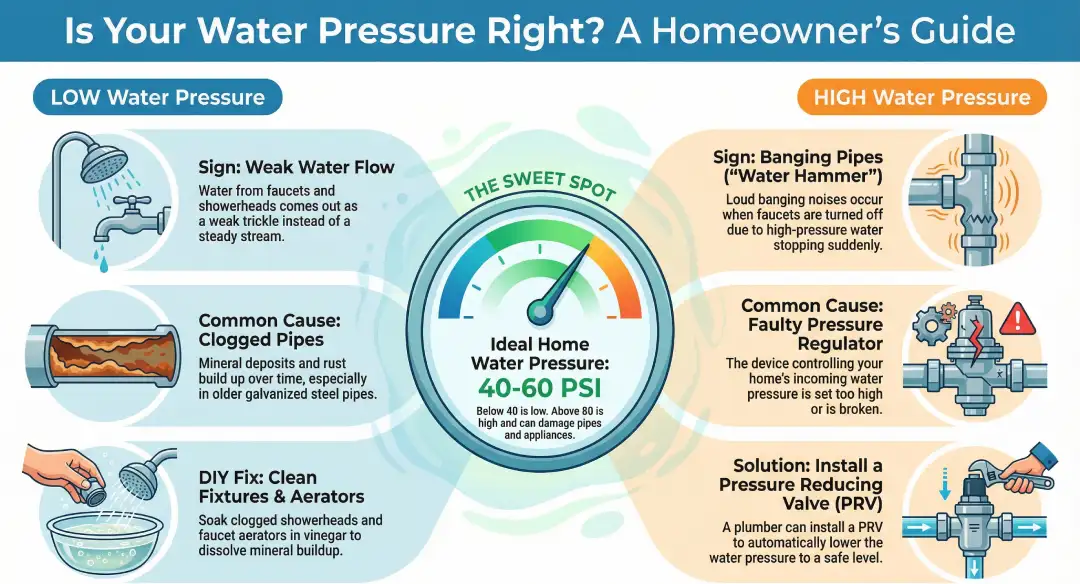
Ideal water pressure for a home is typically between 40-60 psi. Anything below this range is considered low, while anything above 80 psi can be classified as high water pressure. Too low a pressure means your taps and showers may trickle instead of flowing normally. High pressure can cause pipes to burst, damage fixtures, and increase water wastage.
Having the right water pressure ensures that you can comfortably use your plumbing fixtures, and it also prolongs the life of your pipes and appliances. If you’re experiencing issues, it could be a sign that something isn’t functioning properly within your plumbing system.
How to Detect Water Pressure Problems in Your Home
Low or high water pressure isn’t always obvious right away, but there are some clear signs that you might have an issue:
Signs of Low Water Pressure
- Weak Water Flow: If the water coming out of your taps, shower, or kitchen sink is weak, it could indicate low water pressure.
- Slow Drainage: When water takes longer than usual to drain from your sink or bathtub, it might be a sign of reduced pressure.
- Low Pressure in Certain Areas: Sometimes, the problem might be limited to specific fixtures, such as a low pressure shower or kitchen sink.
Signs of High Water Pressure
Banging Pipes: Known as “water hammer,” this can happen when high pressure causes the water to stop suddenly, causing pipes to shake.
- Leaks in Fixtures: High pressure can put excess strain on your plumbing system, causing leaks in faucets, showerheads, or even your toilet.
- Shortened Lifespan of Fixtures: If your faucets, showerheads, or pipes are wearing out quicker than usual, high pressure may be to blame.
The first step to fixing water pressure issues is to identify whether you’re dealing with low or high pressure. You can use a water pressure gauge to measure the pressure at your home’s main faucet. This tool will give you an accurate reading to help you determine whether the pressure is too high or too low.
Common Causes of Water Pressure Problems
Water pressure problems can be caused by a variety of factors. Understanding these causes will help you identify the source of the issue and decide how to fix it.
Causes of Low Water Pressure
- Clogged Pipes: Over time, mineral deposits, rust, and other debris can build up in your pipes, reducing water flow. This is especially common in older homes with galvanized steel pipes.
- Faulty Pressure Regulator: A pressure regulator controls the amount of pressure coming into your home from the municipal water system. If it’s malfunctioning, it may reduce or limit the water pressure.
- Pipe Leaks: Leaking pipes can cause water to escape, which reduces the amount of pressure in your plumbing system.
- Water Meter Valve Issues: If the valve is not fully open, it can restrict water flow to your home.
Causes of High Water Pressure
- Malfunctioning Pressure Regulator: A regulator that’s set too high or is malfunctioning can cause water pressure to increase beyond the recommended level.
- Issues with the City’s Water Supply: Sometimes, the water supply coming into your home can have high pressure due to local municipal issues.
- Incorrectly Set Pressure Valve: If your water pressure valve is set too high, it will result in excess pressure throughout the system.
The benefits of regular plumbing maintenance insist on its importance. Plumbing systems play a crucial role in every home and business.
How to Fix High Water Pressure in Your Home
While low water pressure is commonly discussed, high water pressure can also be a major issue. High water pressure can lead to worn-out pipes, damaged appliances, and even leaks. If you notice banging pipes, leaks around fixtures, or inconsistent water flow, it’s time to address the high water pressure. Here’s how to handle it:
1. Adjust the Pressure Regulator
The first thing to check when dealing with high water pressure is the pressure regulator. Most homes have a pressure regulator that controls the incoming water pressure from the municipal supply regularities. If the regulator is malfunctioning or set too high, it can cause excessive pressure throughout your plumbing system.
Step-by-step fix: You can adjust the pressure regulator using a wrench, but it’s a delicate task. For safety and accuracy, it’s often recommended to hire a professional plumber to make this adjustment. They will set the regulator to the ideal range (usually between 50-60 psi).
2. Install a Pressure Reducing Valve (PRV)
If adjusting the pressure regulator doesn’t work or you don’t have a regulator, installing a Pressure Reducing Valve (PRV) is the next step. A PRV is designed to lower the water pressure coming into your home, making it safe for your plumbing system and appliances.
PRV Installation: A plumber will install the PRV at the point where the water supply enters your home. Once installed, the valve will automatically regulate the pressure, ensuring it stays at a safe level. If you’re unsure, a licensed plumber can quickly assess and install the PRV for you.
3. Check the Water Pump System
In homes with a private water pump or booster system, high water pressure can be caused by an overactive pump. When the pump’s pressure settings are too high, the water pressure throughout the home will increase drastically. If you have a water pump, check its settings or call a plumber to inspect and adjust it.
Adjusting the Pump: You may need to lower the pump’s output pressure to ensure your home gets an optimal water flow rate. This is especially crucial in homes with well water systems or private pumping setups.
4. Check for Leaking Fixtures
High water pressure can place excessive strain on your plumbing system, often resulting in leaky faucets, showerheads, or toilets. If you notice persistent leaks, it could be a sign that the water pressure is too high.
Fixing leaks: For minor leaks, replacing worn-out washers, seals, or O-rings might be enough. However, for persistent issues, consider replacing the fixture entirely or adjusting the pressure with a PRV to prevent future leaks.
How to Fix Low Water Pressure in Your Home
If your home’s water flow feels weak, your daily tasks like showering or washing dishes become frustrating. Fortunately, most low water pressure problems are fixable. Here are several methods to improve water pressure in your home:
1. Flush Your Pipes
Clogged pipes can lead to a drop in water pressure, especially if mineral deposits or rust have built up. This is especially common in older homes with galvanized pipes.
How to flush pipes: To flush the pipes, turn off the main water valve, open all the faucets in your home, and let the water run through for several minutes. This will help clear out any debris or buildup inside the pipes. Be sure to flush out all the faucets and fixtures to ensure a full cleanse of the system.
2. Install or Clean Fixtures
If your low water pressure is isolated to one fixture, like a showerhead or faucet, the problem might be clogged aerators or mineral buildup.
- Cleaning fixtures: Remove the aerators from faucets and soak them in a solution of equal parts water and vinegar for a few hours. Use a small brush to scrub away any debris or minerals, then reattach them. For showerheads, soak them in vinegar as well or replace them if cleaning doesn’t improve the water flow.
- Replacing fixtures: If cleaning doesn’t help, consider replacing your old fixtures with new, low-flow models designed to provide better water flow while conserving water.
3. Repair Pipe Leaks
Leaking pipes are one of the biggest contributors to low water pressure. Even a small leak can result in significant pressure loss throughout the plumbing system. Look for wet spots on your walls, ceilings, or floors, which can indicate a leak.
How to fix pipe leaks: Small leaks can be patched temporarily using pipe repair clamps, but for long-term results, you’ll need to replace the damaged section of pipe. If the leak is major, it’s best to call a plumber immediately to prevent further water wastage and damage to your home.
4. Adjust the Water Meter Valve
The water meter valve controls the water flow to your home, and if it’s partially closed, it could be limiting your water pressure. Check to make sure the valve is fully open.
How to adjust the valve: Locate the water meter valve, typically found near the street or under your home. Use a wrench to fully open the valve. This simple fix can sometimes resolve low water pressure issues caused by a restricted water supply.
Preventing Future Water Pressure Problems
Once you’ve identified and fixed your water pressure problems, it’s important to take steps to prevent them from happening again in the future. Here are some tips to maintain optimal water pressure:
1. Regular Plumbing Inspections
Have your plumbing system inspected by a professional at least once every few years. An inspection can help identify early signs of pipe corrosion, leaks, or other issues that could lead to water pressure problems in the future.
2. Install Water-Saving Fixtures
Water-saving fixtures, like low-flow showerheads and faucets, not only conserve water but can help maintain proper water pressure throughout your home. They’re designed to optimize the flow without causing strain on your plumbing system.
3. Upgrade Old Pipes
If your home has outdated plumbing, especially galvanized steel pipes, consider upgrading to modern materials like copper or PEX. Old pipes are prone to corrosion and buildup, which can cause water pressure issues.
When to Call a Professional Plumber
While many water pressure problems can be resolved with DIY fixes, there are times when it’s best to call in a professional plumber. Here’s when you should seek professional help:
- Persistent Low or High Pressure: If you’ve tried adjusting the pressure regulator or fixing leaks but the issue persists, a plumber can perform a more thorough inspection of your plumbing system and identify hidden issues.
- Faulty Pressure Regulator: If you’re unsure how to adjust or replace a pressure regulator, it’s best to have a professional plumber handle the task to avoid damaging your plumbing.
- Pipe Replacement: If your pipes are old or corroded, it may be time for a replacement. A plumber can recommend the best type of pipes for your home and ensure that they are installed correctly.
- Water Meter Valve Issues: If you’ve checked the valve but still experience water flow issues, a plumber can inspect it to ensure it’s functioning properly or replace it if needed.
A plumber will have the experience and tools necessary to diagnose and fix the issue effectively, saving you time and preventing further damage to your plumbing system. For expert help with any plumbing issues, including fixing low water pressure, Plumber Singapore is here to assist you. Contact us today for a consultation and enjoy optimal water pressure in your home.
Final Thoughts: Fix Water Pressure Problems
Water pressure issues, whether too low or too high, can significantly impact your daily activities and plumbing system. From weak showers to leaking pipes, understanding how to identify and fix water pressure problems is crucial for maintaining a functional home. By following the steps outlined above, you can easily troubleshoot and resolve most water pressure issues on your own, but don’t hesitate to call a professional plumber if the problem persists.
At Plumber Singapore, we specialize in diagnosing and fixing water pressure problems with expertise and efficiency. Whether it’s adjusting your pressure regulator, repairing leaks, or replacing old pipes, our licensed plumbers are ready to provide top-notch service. Contact us for reliable, affordable plumbing solutions and ensure your home’s plumbing system remains in great shape.
Frequently Asked Questions
1. What causes low water pressure in my home?
Low water pressure can be caused by several factors, including clogged pipes, a malfunctioning pressure regulator, pipe leaks, or issues with your water supply. It’s essential to identify the root cause of the problem to fix it effectively.
2. How do I fix low water pressure in my shower?
To fix low water pressure in your shower, start by cleaning the showerhead for mineral buildup. If that doesn’t help, check the water pressure using a gauge, inspect the pipes for leaks, and ensure the water meter valve is fully open. If needed, you may have to replace a clogged fixture or pressure regulator.
3. Is high water pressure dangerous?
Yes, high water pressure can be dangerous. It can lead to damaged pipes, worn-out fixtures, and even leaks. If you notice banging pipes or water leaking from fixtures, it’s important to address the issue to avoid costly damage.
4. How do I fix high water pressure in my home?
To fix high water pressure, you may need to adjust or replace the pressure regulator, install a pressure-reducing valve, or check your water pump system. A plumber can assist with these adjustments to ensure safe water pressure levels.
5. When should I call a plumber for water pressure problems?
If you’ve tried fixing the issue yourself but the water pressure problem persists, it’s time to call a professional plumber. They can diagnose and resolve issues such as faulty pressure regulators, leaking pipes, or complex plumbing problems.
6. What is the ideal water pressure for a home?
The ideal water pressure for a home is typically between 40 and 60 psi. Anything above 80 psi is considered too high, while anything below 40 psi can result in low water pressure issues.