
Plumbing is a critical part of any home, ensuring the smooth flow of water to your faucets, showers, and appliances. However, as plumbing pipes age or experience damage from corrosion, clogs, or external factors, they can begin to fail, leading to issues ranging from minor leaks to costly water damage. Recognizing the signs you need to replace your plumbing pipes is essential in preventing more severe problems, such as water contamination or total system failure. In this guide, we will explore the key indicators that signal when your pipes need replacing, the risks of delaying replacement, and the steps involved in ensuring your home’s plumbing system remains safe and efficient.
Why Replacing Your Plumbing Pipes Is Crucial
Your home’s plumbing pipes are more than just water carriers; they are integral to the proper functioning of your water system. When these pipes begin to fail, it can result in several serious issues. The most obvious impact is the disruption of water flow, which affects everything from drinking water to your ability to wash and clean properly. However, there are also long-term consequences to ignoring the need for pipe replacement.
The most pressing issue with old, corroded, or damaged pipes is the potential for leaks. Leaking pipes can lead to water damage in your home, including wet floors, stained walls, and mold growth. These issues can damage the structure of your home, requiring expensive repairs. Furthermore, pipes that are too old may not meet current plumbing codes or standards, which could reduce the overall safety and efficiency of your home’s plumbing.
Another reason for pipe replacement is the health aspect. Pipes that have been in place for decades, especially those made of lead or galvanized steel, can leach harmful substances into your water supply. Lead, in particular, is a serious health hazard, especially for children and pregnant women. Therefore, replacing old pipes is not just a matter of convenience, it’s a necessary step in safeguarding your home and health.
Risks of Keeping Old Pipes
Old pipes are more susceptible to rust, corrosion, and wear over time. If you’re living in an older home, your plumbing system may contain outdated materials like lead, galvanized steel, or polybutylene pipes, all of which have known issues. Lead pipes are a significant concern because they can contaminate drinking water with harmful lead particles, which is why they are no longer used in modern plumbing systems. Galvanized steel pipes are also prone to rust and corrosion, which can reduce water flow and affect the quality of the water.
Even if your home is not old, pipes can still deteriorate from issues like water pressure problems, soil shifting, or freeze-thaw cycles. If you’re constantly repairing your plumbing system, it may be time to consider replacing the entire system. The benefits of regular plumbing maintenance insist on its importance. Plumbing systems play a crucial role in every home and business.
Common Types of Plumbing Pipes That Need Replacing
Over the years, various materials were commonly used for plumbing pipes, but many of them have since been deemed unreliable due to their tendency to corrode, break, or contaminate water. Here’s a quick overview of the most common outdated pipe materials that need replacing:
Lead Pipes
Lead pipes were once common in plumbing systems because of their malleability and durability. However, lead is now known to be a toxic substance that can contaminate drinking water. Over time, lead pipes can corrode and release lead particles into the water supply, posing a serious health risk. Lead poisoning can cause various health issues, including developmental problems in children.
Galvanized Steel Pipes
Galvanized steel pipes were widely used in homes built before the 1960s. These pipes are coated with zinc to prevent rust, but over time, the coating deteriorates, leaving the pipes vulnerable to rust and corrosion. As the pipes corrode, water flow decreases, and the water may become discolored and unclean.
Polybutylene Pipes
Polybutylene pipes were used in homes between the 1970s and 1990s. These plastic pipes were inexpensive to install, but they have a history of cracking and leaking, especially when exposed to chlorine in the water supply. This material has been discontinued due to its poor durability.
Copper Pipes
Copper pipes are generally reliable, but they can still face issues like corrosion when exposed to acidic water. Over time, copper pipes can wear out, leading to leaks or even pipe bursts. This is particularly common in homes that have acidic or very soft water.
PVC Pipes
PVC pipes are used in modern plumbing systems, and while they are generally durable, they can become brittle and prone to cracking as they age. If your home has older PVC pipes, it’s important to monitor them for signs of wear and replace or repair PVC pipes before they cause problems.
Key Signs You Need to Replace Your Plumbing Pipes
As plumbing pipes age, they begin to show signs that replacement is necessary. Being able to recognize these signs early can help you avoid more extensive damage to your home. Here are the top indicators that your plumbing pipes need replacement:
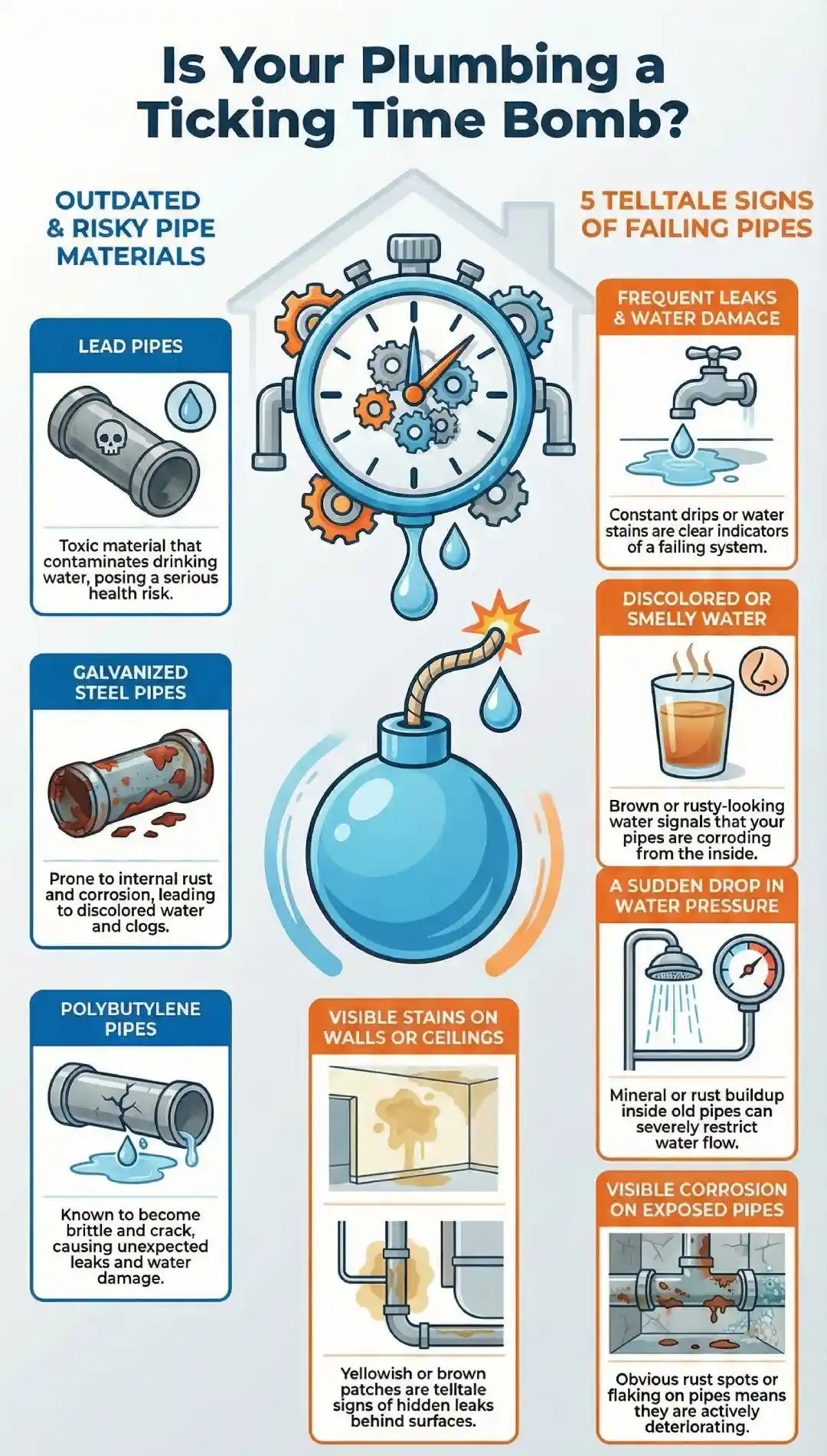
1. Frequent Leaks or Water Damage
One of the most obvious signs that your pipes need replacing is frequent leaks. Leaking pipes can cause significant water damage to your home, from water stains on ceilings to wet floors. Leaks can occur in any part of your plumbing system, including your water mains, joints, and valves. If you find yourself frequently calling a plumber to fix leaks, it may be time to replace your pipes entirely.
2. Discolored or Smelly Water
If your water appears rusty, brown, or discolored, it’s a sign that your pipes may be corroding. Rusty water often comes from galvanized steel pipes, which are prone to rusting over time. Additionally, if your water has a foul smell, it may indicate that bacteria or mold is growing inside your pipes, which can be caused by long-term stagnation or leaks.
3. Low Water Pressure
Old, corroded pipes can accumulate sediment, rust, or scale buildup, which obstructs the flow of water. If you notice that your water pressure has significantly dropped throughout your home, it could be a sign that your pipes are clogged, corroded, or deteriorating. Low water pressure can make even basic tasks like showering or washing dishes frustrating.
4. Visible Stains or Watermarks on Walls and Ceilings
Water leaks from pipes inside your walls or ceilings can create visible stains or watermarks on your walls. These stains may appear as yellowish or brown patches and are a clear indicator that your pipes are leaking and need replacement.
5. Unusual Noises in the Plumbing System
If you hear strange noises such as banging, clanking, or gurgling coming from your pipes, it could be a sign of water hammer, a common problem in homes with old pipes. Water hammer occurs when there is a sudden change in the water flow, causing pressure to build up in the pipes. Over time, this can damage the plumbing system, especially if the pipes are already weakened by age.
6. Recurring Clogs and Blockages
If you frequently experience clogged drains or toilets, your pipes could be filled with debris, minerals, or rust. This is a sign that your pipes are no longer able to effectively carry away waste and water, and they may need to be replaced.
7. Wet Spots Around the Foundation or in the Yard
Underground pipes, particularly those made of older materials like galvanized steel, can develop leaks that cause wet spots in your yard or near the foundation of your home. If you notice soft or wet patches in your lawn, it may indicate a leaking pipe underground, which can lead to major water damage if not addressed.
8. Visible Corrosion or Rust on Pipes
If you notice rusty patches or signs of corrosion on exposed pipes in your home, it’s a clear sign that the pipes are deteriorating and may soon fail. Corroded pipes are more prone to leaks and bursts, which can cause serious damage to your home’s plumbing system.
The Pipe Replacement Process: What to Expect
Replacing plumbing pipes is a significant home improvement task that requires careful planning and execution. Whether your home is experiencing leaks, low water pressure, or discolored water, replacing old or damaged pipes is often the best solution. Understanding the replacement process can help you prepare for what’s to come, both in terms of the physical work and potential costs involved.
Steps Involved in Replacing Plumbing Pipes
Initial Inspection
Before any work begins, a licensed plumber will conduct a thorough inspection of your home’s plumbing system. This will involve checking all visible pipes, assessing the overall condition of the plumbing, and identifying any areas that need attention. The plumber may also check for leaks or signs of corrosion and may ask questions about any ongoing plumbing issues, such as frequent blockages or low water pressure. This inspection will help them create a plan for replacing the pipes.
Planning and Preparing for Pipe Replacement
Once the plumber has assessed the condition of your pipes, they will provide a plan for replacement. This includes selecting the right materials for the new pipes, such as copper, PEX, or PVC, depending on the needs of your plumbing system. For homes with outdated plumbing, such as galvanized steel or lead pipes, the plumber will recommend modern materials that are durable and long-lasting.
You’ll also need to prepare for the disruption this process may cause. In many cases, especially in older homes, the plumber may need to cut into walls or floors to access the pipes. This preparation is crucial to ensure the plumber has easy access to the areas that need to be worked on.
Replacing the Pipes
With everything in place, the plumber will begin the process of replacing your old pipes. This involves removing the outdated pipes and replacing them with new ones. Depending on the complexity of the job, this could involve replacing just a few sections or repiping the entire house. The plumber will carefully install the new pipes, ensuring they are connected correctly and securely to prevent any future issues.
If your plumbing system involves underground pipes, such as those leading to your garden or foundation, this may require digging and more extensive work. The plumber will ensure the new pipes are properly installed and tested before finishing the job.
Post-Replacement Inspections and Testing
Once the new pipes are installed, the plumber will test the system to ensure everything is working correctly. This will involve turning the water back on and checking for leaks, ensuring the pipes are properly pressurized, and that water flows smoothly throughout your home. The plumber will also check for any odd noises, leaks, or irregularities that might indicate an issue.
In some cases, if drywall or flooring was cut or removed, the plumber will work with a contractor to repair the damage, ensuring your home is put back in order.
Why Professional Help is Essential
While some homeowners might be tempted to tackle pipe replacement as a DIY project, it’s highly recommended to hire a professional plumber like plumber Singapore for this task. Replacing plumbing pipes is not only physically demanding but also requires a deep understanding of plumbing systems to ensure everything is installed correctly and safely. Below are some of the key reasons why professional help is essential:
Expertise and Experience
A licensed plumber brings a wealth of knowledge and expertise to the table. They can identify the most suitable materials for your plumbing system, properly install the new pipes, and ensure that everything is up to code. Professional plumbers are also familiar with the latest technologies and techniques for pipe installation, which can improve the durability and efficiency of your plumbing system.
If your plumbing involves complex issues, such as hard-to-reach pipes or underground leaks, a professional plumber will have the right tools and experience to get the job done efficiently and effectively. Hiring a professional can prevent the need for costly repairs down the line, ensuring that the job is done right the first time.
Safety and Code Compliance
Installing plumbing pipes requires strict adherence to local building codes and regulations. A professional plumber will ensure that your new plumbing system meets these standards, reducing the risk of future issues. Additionally, improper installation can lead to safety hazards, such as leaks, water damage, or even contamination of your water supply. By hiring a licensed plumber, you ensure that your new pipes are safely and correctly installed.
Time and Cost Efficiency
Replacing plumbing pipes can be a lengthy and complex process. A professional plumber has the skills, tools, and experience to complete the job quickly and efficiently, saving you time. In contrast, attempting a DIY replacement can lead to mistakes, delays, and additional repair costs. A professional plumber will also ensure that the materials used are of high quality, which can help you avoid frequent replacements and repairs in the future.
Warranty and Insurance
Many professional plumbing companies offer warranties on their work, providing peace of mind in case something goes wrong after the job is completed. This warranty can cover labor and parts, saving you from unexpected repair costs. Additionally, licensed plumbers are insured, which means you’re protected in case of damage to your property during the work.
Final Thoughts
Replacing your plumbing pipes is a significant investment in the future of your home. If you’ve noticed signs like frequent leaks, discolored water, low water pressure, or visible corrosion, it may be time to replace your old pipes. Understanding the process and knowing when to call in a professional can help you avoid costly repairs and protect your home from water damage.
If you live in Singapore and suspect it’s time to replace your plumbing pipes, Plumber Singapore is here to help. Our team of licensed and experienced plumbers is ready to provide you with reliable and affordable plumbing solutions. Don’t wait until the problem worsens, contact us today for a consultation and ensure your plumbing system is up to date and running smoothly.
FAQs: Signs You Need to Replace Your Plumbing Pipes
1. How do I know if my plumbing pipes need replacement?
You can tell your pipes need replacing if you notice signs like frequent leaks, low water pressure, discolored water, rust around pipes, or recurring clogs. Visible water stains on walls and ceilings or unusual noises from the plumbing system are also strong indicators of deteriorating pipes.
2. What is the lifespan of plumbing pipes?
The lifespan of plumbing pipes depends on the material. Copper pipes can last 50-70 years, while galvanized steel pipes may last 20-50 years. PVC pipes typically last 25-40 years, and lead pipes are unsafe and should be replaced immediately. If your pipes are nearing the end of their lifespan or showing signs of wear, it’s time to consider replacement.
3. Can I replace plumbing pipes myself?
Replacing plumbing pipes requires specialized knowledge, tools, and experience. It’s a complex task that involves cutting through walls or floors and ensuring everything is installed to code. Hiring a professional plumber ensures the job is done safely, efficiently, and to local plumbing standards, avoiding costly mistakes.
4. What happens if I don’t replace old plumbing pipes?
If you delay replacing old plumbing pipes, you risk water damage, mold growth, and structural issues in your home. Deteriorating pipes can lead to leaks, low water pressure, and even complete pipe failure, which can cause significant water damage and increase repair costs.
5. How much does it cost to replace plumbing pipes in Singapore?
The cost of replacing plumbing pipes in Singapore depends on several factors, including the size of your home, the type of pipes being replaced, and the complexity of the job. On average, you can expect to pay between SGD 1,000 and SGD 5,000 or more for a full repiping, but getting a quote from a licensed plumber will give you a more accurate estimate.