
When it comes to home renovations or new construction, selecting the right plumbing fixtures is essential for both functionality and aesthetics. The right plumbing fixtures not only enhance the look of your bathroom or kitchen but also ensure optimal water efficiency, saving you money in the long run. From faucets and showerheads to toilets and sinks, choose the right plumbing fixtures can make all the difference in creating a comfortable, sustainable, and stylish space.
What Are Plumbing Fixtures?
Plumbing fixtures are devices that are connected to a home’s plumbing system to supply or drain water. These fixtures include sinks, faucets, showers, bathtubs, toilets, and even more specialized items like bidets and urinals. The primary purpose of these fixtures is to provide a controlled water flow, whether for washing, bathing, or draining.
Fixtures are an essential part of any home, not only because they enable the practical use of water but also because they have a significant impact on the appearance and feel of your space. Choosing the right fixtures goes beyond aesthetics, it’s about ensuring efficiency, durability, and ease of maintenance.
The Importance of Choosing the Right Fixtures
The right plumbing fixtures serve multiple purposes. Functionality is, of course, key, as they need to work efficiently and last for many years. However, the aesthetic aspect is equally important, fixtures should complement the design of your home, whether it’s modern, traditional, or somewhere in between.
Moreover, plumbing fixtures also impact water efficiency. With rising utility costs and growing environmental concerns, it’s increasingly important to choose fixtures that help conserve water. Opting for low-flow faucets, toilets, and showerheads can drastically reduce water consumption, which not only helps the planet but also cuts down your monthly water bills.
Factors to Consider When Choosing Plumbing Fixtures
Determining Your Style and Design Preferences
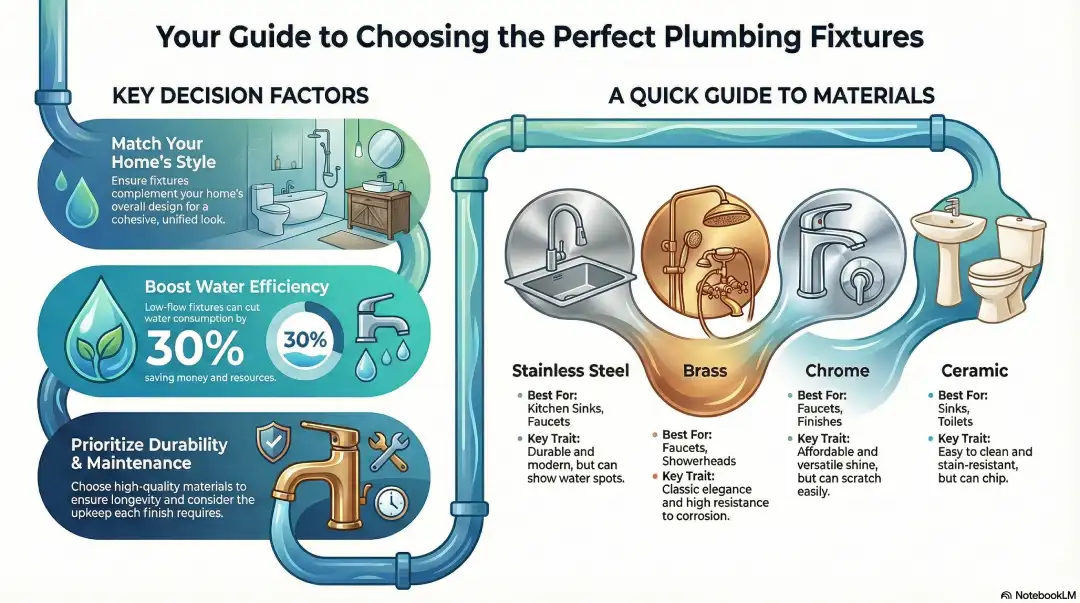
One of the first things to consider when choosing plumbing fixtures is the style of your home. Your fixtures should complement the overall theme and design of the room. Whether your home features a modern, industrial, minimalist, or classic style, there are plumbing fixtures available to match.
For example, if you have a modern kitchen, sleek, high-tech faucets and stainless steel sinks may be the ideal choice. Alternatively, if your home leans towards a traditional or rustic design, you may opt for classic fixtures like antique bronze faucets or cast iron sinks.
Creating a Cohesive Look
While each room should have fixtures suited to its function, it’s also essential that your plumbing fixtures throughout the house work cohesively. If your kitchen fixtures are modern, you might want to match them with contemporary bathroom fixtures for a more unified aesthetic. On the other hand, if you enjoy mixing styles, you can opt for complementary but contrasting fixtures.
A cohesive design doesn’t mean everything has to match exactly, but the materials, finishes, and overall style should harmonize across spaces.
Functional Considerations
Water Efficiency
When selecting plumbing fixtures, it’s crucial to consider water efficiency. With the ongoing push for sustainability, water-efficient fixtures are becoming a standard choice for homeowners. Many plumbing fixtures now come with a WaterSense certification, indicating that they meet or exceed EPA water efficiency standards.
For instance, low-flow faucets and dual-flush toilets use significantly less water than traditional models, without sacrificing performance. A well-chosen low-flow fixture can reduce water consumption by as much as 30%, saving you money on utility bills while reducing your environmental impact.
Durability and Maintenance
Another critical factor to keep in mind is the durability of the fixture. Opting for high-quality materials can ensure that your plumbing fixtures last for many years. Materials like stainless steel, brass, and ceramic are durable, easy to clean, and resistant to corrosion.
Additionally, certain finishes require more maintenance than others. Chrome faucets, for example, may need regular cleaning to maintain their shine, whereas matte or brushed finishes tend to show fewer watermarks and fingerprints. When selecting fixtures, consider how much maintenance you’re willing to perform and choose accordingly.
Budget Considerations
Choosing plumbing fixtures within your budget is essential, but it’s important to balance cost with quality. While you may be tempted to opt for cheaper fixtures, remember that they might not last as long and may require more frequent repairs.
On the other hand, high-end plumbing fixtures often come with additional features, like touchless technology, better build quality, and enhanced water efficiency. When selecting fixtures, think long-term: what might cost more upfront could save you money in the long run through reduced water usage and fewer maintenance issues.
Choosing Fixtures for Different Areas of Your Home
Bathroom Fixtures: Sinks, Faucets, and Showers
The bathroom is a place where fixtures are both functional and aesthetic. When choosing bathroom sinks, consider factors like space and functionality. Under-mount sinks offer a sleek, modern look, while pedestal sinks give a classic vibe. Vessel sinks are a popular choice for more luxurious bathroom designs.
For faucets, you’ll need to decide between single-handle or double-handle faucets. Single-handle faucets are more modern and convenient, while double-handle faucets can offer more precise temperature control.
Showers are another essential bathroom fixture. You can choose between a rain shower, handheld showerhead, or even a thermostatic shower system for more control over the water temperature.
Bathtubs and Toilets
Bathtubs come in various types, including freestanding, alcove, or drop-in bathtubs. Each type has its pros and cons depending on your space and needs. For smaller bathrooms, alcove bathtubs are often a better fit, while freestanding tubs work well in spacious, luxury bathrooms.
When it comes to toilets, consider low-flow models or dual-flush toilets, which can significantly reduce water consumption while still offering excellent performance.
Kitchen Fixtures: Choosing the Right Sink and Faucet
The kitchen sink is a central fixture in your home, so it’s important to choose one that suits your cooking and cleaning needs. Consider the material (e.g., stainless steel, composite granite) and size. Undermount sinks are great for modern kitchens, while top-mount sinks are easier to install.
When selecting kitchen faucets, consider features like pull-down or pull-out faucets for ease of use, especially when cleaning large pots or washing vegetables. Touchless faucets are also a great choice for a modern kitchen, offering convenience and reducing water waste.
Utility and Laundry Room Fixtures
Utility sinks are perfect for laundry rooms and garages where you may need to wash large items, clean tools, or handle messy tasks. Opt for a deep basin sink made of durable material like stainless steel. Additionally, choosing a high-efficiency faucet for laundry tasks can improve water usage and reduce waste.
Selecting the Right Materials for Plumbing Fixtures
When choosing plumbing fixtures, the material plays a crucial role in durability, maintenance, and overall performance. The right material can make a big difference in the long-term usability of your fixtures, as well as the ease of cleaning and upkeep. Here’s a breakdown of the most common materials used in plumbing fixtures and what to consider when choosing between them:
Stainless Steel
Stainless steel is one of the most popular materials for kitchen and bathroom plumbing fixtures due to its durability, resistance to corrosion, and modern look. It is widely used for sinks, faucets, and showerheads. Stainless steel is also easy to clean and resistant to staining, making it a practical option for high-traffic areas like kitchens and bathrooms.
However, stainless steel can show water spots and fingerprints, requiring regular maintenance to keep it looking pristine. Additionally, it tends to be more expensive than other materials, but the investment is worthwhile given its longevity.
Brass
Brass is another commonly used material, especially for faucets and showerheads. It is highly durable and resistant to corrosion, making it an excellent choice for both kitchen and bathroom fixtures. Brass fixtures also have an elegant, classic look that can suit both traditional and modern home styles.
Brass tends to maintain its appearance over time and can develop a beautiful patina as it ages, adding character. However, it can be more prone to water spots and tarnishing than stainless steel, so it requires regular polishing.
Chrome
Chrome is one of the most common finishes for faucets, showerheads, and other plumbing fixtures. It is well-known for its shine and affordability. Chrome fixtures are also highly resistant to rust and corrosion, making them a reliable choice for many homeowners.
However, chrome finishes can scratch more easily than other materials, and they require regular cleaning to maintain their gleam. Despite this, chrome remains a popular choice due to its low cost and versatility, fitting well into many different home styles.
Matte and Brushed Finishes
For those looking for a modern, sleek look, matte or brushed finishes are an excellent option. These finishes are highly resistant to fingerprints and water spots, making them ideal for kitchens and bathrooms that experience high usage. Matte finishes have become a trendy option, particularly in modern and industrial-style homes.
Though matte and brushed finishes tend to show fewer marks, they can still collect grime and require occasional cleaning. These finishes are usually made from materials like brushed nickel or brushed bronze, which are highly durable and resistant to corrosion.
Ceramic
Ceramic is a great material choice for bathroom sinks, bathtubs, and toilets. It is durable, easy to clean, and resistant to stains and scratches. Ceramic fixtures also come in a variety of colors and finishes, allowing for a more customized look in your bathroom.
However, ceramic fixtures can chip if dropped, so it’s important to handle them with care during installation and use. Despite this, ceramic remains a top choice due to its affordability, versatility, and ease of maintenance.
How Material Affects Maintenance and Longevity
The material you choose for your plumbing fixtures will have a direct impact on their maintenance and lifespan. For example, while stainless steel is incredibly durable and resistant to rust, it may show water spots more easily, requiring regular cleaning. In contrast, materials like brass and chrome are durable but need more upkeep to keep their appearance intact.
Additionally, water quality plays a big role in the lifespan of your plumbing fixtures. Hard water, which contains high levels of minerals, can cause mineral buildup on your fixtures over time, particularly with chrome and stainless steel finishes. If you live in an area with hard water, you may want to choose fixtures with finishes that are less prone to visible buildup or consider installing a water softener.
The longevity of your plumbing fixtures also depends on how well you care for them. Regular cleaning, avoiding harsh chemicals, and addressing plumbing issues like leaks or drips promptly can help your fixtures last longer and perform better.
How to Choose Fixtures That Reflect Your Personal Style
Plumbing fixtures are not just functional, they can also be a statement of your home’s personality. Choosing fixtures that reflect your personal style can turn simple elements like faucets and sinks into a defining feature of your space.
Bold vs. Subtle Fixtures
Some homeowners love making a statement with their fixtures by choosing bold, unique pieces that stand out in the room. For instance, a vintage brass faucet or a luxurious freestanding bathtub can serve as the focal point of a bathroom. If you prefer a more subtle approach, you can choose fixtures that blend seamlessly with the design of the room while maintaining functionality.
Fixtures like touchless faucets, sleek stainless steel sinks, and modern showerheads provide a minimalist touch that can complement any modern home style.
Incorporating Trends While Maintaining Timelessness
While it’s fun to incorporate current trends into your home’s design, it’s also important to select fixtures that will stand the test of time. Opting for fixtures in classic finishes like brushed nickel or polished chrome can help ensure that your fixtures remain stylish even as trends change.
You can also mix trendy elements, like matte black faucets or gold-plated showerheads, with more timeless pieces, such as white ceramic sinks or stainless steel kitchen faucets, to strike a balance between modern and classic design.
When to Consult a Professional
Choosing plumbing fixtures for your home is a process that combines style, functionality, and long-term value. However, it can also be complex, especially when considering factors like water efficiency, material longevity, and proper installation. If you’re unsure about which fixtures would be best for your space, consulting a professional plumber can be a valuable step in the process.
Professional plumbers have the expertise to recommend fixtures that are suitable for your plumbing system and your home’s needs. They can also ensure that the fixtures are installed correctly, preventing potential issues like water pipe leaks or water pressure problems down the line.
If you’re located in Singapore, Plumber Singapore offers expert guidance on choosing and installing the right plumbing fixtures for your home. We can help you select fixtures that fit your style, needs, and budget, and handle the installation process efficiently.
FAQs: How to Choose the Right Plumbing Fixtures for Your Home
1. What factors should I consider when selecting plumbing fixtures?
When selecting plumbing fixtures, consider factors such as style, material, durability, maintenance requirements, and water efficiency. It’s important to choose fixtures that match your home’s aesthetic while ensuring they are functional, durable, and easy to maintain. Additionally, choose water-efficient fixtures to help reduce your water usage and utility bills.
2. How do I know which material is best for my plumbing fixtures?
The best material for plumbing fixtures depends on factors like durability, appearance, and maintenance. For kitchens, stainless steel is highly durable and resistant to stains, while brass is ideal for bathroom faucets due to its classic look and resistance to corrosion. If you’re looking for low maintenance, matte or brushed finishes may be ideal as they show fewer water spots.
3. Are low-flow plumbing fixtures effective?
Yes, low-flow plumbing fixtures are highly effective in reducing water consumption. They are designed to maintain water pressure while using less water, which helps lower your utility bills and conserve water. Look for WaterSense-certified fixtures to ensure they meet efficiency standards without sacrificing performance.
4. Can I mix different plumbing fixture finishes in my home?
Yes, you can mix different finishes, but it’s important to maintain a balance to avoid a cluttered or mismatched look. For example, you might combine brushed nickel in the bathroom with matte black fixtures in the kitchen for contrast, while ensuring that the overall design maintains cohesion through complementary tones and materials.
5. How do I install new plumbing fixtures, and should I hire a professional?
While some simple plumbing fixtures can be installed DIY, many require professional expertise to ensure proper installation and avoid issues like leaks or water pressure problems. Plumber Singapore can help you with expert advice, fixture selection, and proper installation to ensure that everything works as expected and complies with local standards.