
Imagine turning on your tap in Singapore, only to see reddish-brown water swirling in the basin or tasting a metallic flavor in your morning coffee. These aren’t just minor annoyances; they are early indicators of pipe corrosion in your plumbing system. In older HDB flats and established condos, where pipes have endured years of use, corrosion often starts silently, eating away at the pipes from the inside out.
The problem is more than cosmetic. Corrosion weakens your pipes, leading to leaks, water contamination, and even structural damage if left unaddressed. A small issue, like a rusty faucet, can escalate into a flooded home, damage to your neighbors’ ceilings, or worse, affect your family’s health.
The Science of Decay: Why Your Pipes Are Corroding
At its core, pipe corrosion is a chemical or electrochemical reaction between the metal of your pipes and the water flowing through them. In Singapore, while our tap water is safe and high-quality, factors like dissolved oxygen, fluctuating pH levels, and even the speed of the water can trigger oxidation. When oxygen molecules react with metal, they create oxides, better known as rust.
This process is often accelerated in high-rise buildings where high water pressure creates “velocity corrosion,” physically wearing down the internal walls of the pipe. Over time, this results in pipe wall thinning, leaving your plumbing vulnerable to the high-pressure surges common in our local water network.
Understanding Galvanic Corrosion in Older Homes
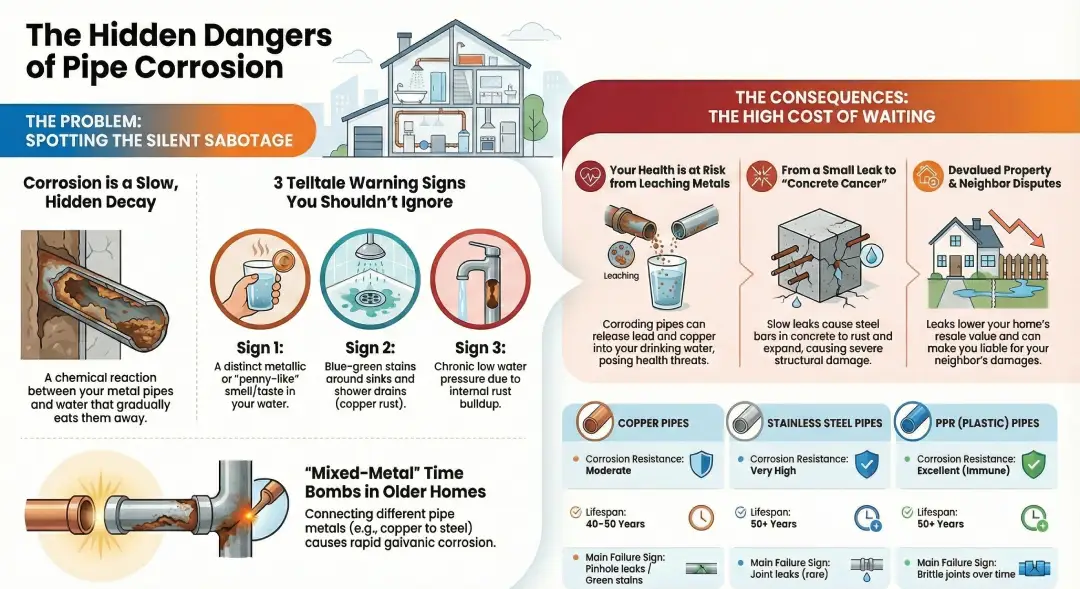
One of the most common causes of a water pipe corroded beyond repair is “galvanic corrosion.” This occurs when two different types of metal, such as a newer copper pipe and an older galvanized steel pipe, are connected directly to each other. Because these metals have different electrical potentials, a tiny electric current flows between them, causing the “weaker” metal to dissolve rapidly at the joint.
If you live in an older property and have only done partial renovations, you might have these “mixed-metal” ticking time bombs hidden behind your walls. Ensuring all your water pipe leak repairs use compatible materials like PPR or stainless steel is vital to stopping this reaction.
The “Penny” Smell and Other Warning Signs You Are Ignoring
Your plumbing usually tries to tell you it is failing long before a pipe actually bursts. A distinct “penny-like” or metallic smell in your water is a strong indicator of heavy metal leaching. Furthermore, if you see blue-green staining around your shower floor or basin drains, it is a sign that your water pipe copper components are oxidizing. These stains are essentially “copper rust” being carried by the water. Another subtle sign is chronic low water pressure; as corrosion builds up inside the pipe, it creates “tubercles” or rusty mounds that act like cholesterol in an artery, choking the flow of water to your fixtures.
Material Comparison: Water Pipe Copper or Stainless Steel?
When homeowners face the reality of a failing system, the big question is usually whether to stick with water pipe copper or stainless steel. Both materials have their place in Singaporean plumbing, but they react to corrosion differently. Copper is naturally biostatic (resists bacteria) but can be sensitive to acidic water. Stainless steel, on the other hand, is incredibly resistant to oxidation and high-velocity water, making it a popular choice for main incoming lines. Understanding the pros and cons of each helps you make an informed decision during a plumbing inspection or renovation.
| Feature | Copper Pipes | Stainless Steel Pipes | PPR (Plastic) Pipes |
| Corrosion Resistance | Moderate (vulnerable to low pH) | Very High | Excellent (Immune to rust) |
| Lifespan | 40–50 Years | 50+ Years | 50+ Years |
| Common Use | Indoor HDB/Condo water lines | Main supply lines / Modern Condos | Modern HDB hot/cold lines |
| Main Failure Sign | Pinhole leaks / Green stains | Joint leaks (rare) | Brittle joints over time |
Health Hazards and the Financial Domino Effect
The Invisible Health Hazards of Corroded Plumbing
One of the most concerning aspects of pipe corrosion in your plumbing is that it directly impacts the safety of your drinking water. As pipes degrade, they release metallic particles into the water stream, a process known as leaching. While Singapore’s water supply is lead-free at the source, older household plumbing may still contain lead soldering or brass fittings that can release toxic heavy metals.
Lead ingestion is particularly dangerous for children and pregnant women, as it accumulates in the body and can damage the nervous system and kidneys. Similarly, excessive copper leaching can cause gastrointestinal issues like nausea and stomach cramps. Beyond metals, a water pipe corroded on the inside becomes pitted and uneven, creating a perfect “biofilm” trap where bacteria like E. coli or Legionella can flourish, hidden away from the protective chlorine in the water.
The Financial Domino Effect: Why “Wait and See” Costs Thousands
Many homeowners view a small leak as a minor annoyance, but in a concrete-heavy environment like Singapore, it is a structural threat. When a corrosion of water pipes issue leads to a slow, concealed leak, the water seeps into the floor slabs and walls. Over time, this moisture reaches the steel reinforcement bars (rebars) inside the concrete.
As these steel bars rust, they expand to nearly three times their original size, exerting massive internal pressure that causes the concrete to crack and fall off, a condition known as concrete spalling or “concrete cancer.” Fixing spalling concrete in an HDB ceiling is significantly more expensive than a standard water pipe leak repair, often requiring specialized contractors and multiple days of hacking and patching.
Impact on Home Safety and Resale Value
If you plan to sell your HDB or condo in the future, ignored pipe corrosion can become a major hurdle during the valuation and inspection process. Savvy buyers and property agents look for tell-tale signs like bubbling paint, warped wooden floorboards, or musty odors, all of which suggest underlying plumbing failures.
A home with a history of inter-floor leaks or visible ceiling patches is often viewed as a high-risk investment, leading to lower offers or even the collapse of a sale. Proactively addressing a water pipe corroded beyond its lifespan with a modern stainless steel pipe installation not only protects your current living standards but also safeguards the market value of your property.
Pipe corrosion is a gradual process that can weaken your plumbing system over time, leading to leaks, water contamination, and higher repair costs. Left unchecked, it can result in severe damage to your pipes. Following effective pipe corrosion prevention practices is essential to maintaining the integrity of your plumbing.
Concealed Leaks and Legal Liabilities
In Singapore’s high-density living, your plumbing is intimately connected to your neighbor’s. A basin leak or a corroded pipe in your unit can easily become a ceiling leak for the person living below you. Under the HDB “Goodwill Repair Assistance” scheme and general property laws, homeowners are often responsible for the maintenance of their own internal pipes. If a leak from your property causes damage to a neighbor’s expensive built-in cabinets or electronics, you may be held liable for the restoration costs. Keeping your plumbing maintenance up to date is not just about your own comfort; it is about maintaining good relations with your community and avoiding potential legal disputes or town council interventions.
The Role of Biofilm and Microbial Growth
A heavily corroded pipe does more than just leak; it acts as an incubator. The rough, rusty surfaces inside a water pipe corroded by years of use trap organic matter and minerals, forming a thick layer of biofilm. This layer protects microorganisms from the disinfectants used in our municipal water supply. This can lead to persistent odors in your water and even localized skin irritations for those with sensitive skin. Regularly flushing your system and replacing segments that show heavy internal scaling is essential for maintaining the high hygiene standards we expect in Singapore.
Restoration Solutions and the Preventive Strategy
Modern Solutions: From Spot Repairs to Full Repiping
When you are faced with a water pipe corroded beyond simple patching, you have several professional paths to take. For minor localized issues, a plumber can perform a surgical replacement of the affected segment, often upgrading the section to water pipe copper or stainless steel depending on your existing setup. However, if your home is more than 20 years old and experiencing multiple leaks, a full repiping is often the most cost-effective long-term move.
In modern Singaporean renovations, many homeowners opt for PPR pipe installation because these pipes are heat-fused together, creating a seamless system that is entirely immune to the corrosion of water pipes. This eliminates the risk of joint failure and internal rust forever, providing total peace of mind.
The “Anti-Corrosion” Checklist: Protecting Your Home’s Lifeline
Preventing pipe corrosion in your plumbing is far easier than fixing the damage caused by a burst. You can significantly extend the life of your metal pipes by managing the environment they operate in. First, ensure your water heater is serviced regularly; a failing anode rod in a storage heater can cause “back-corrosion” that sends rusty water into your cold-water lines. Second, avoid using harsh chemical drain cleaners, as the high acidity levels can eat away at the rubber seals and metal lining of your pipes. Finally, if you live on a lower floor of a high-rise, consider installing a Pressure Reducing Valve (PRV). By lowering the force of the water, you reduce the physical friction and “scouring” effect that leads to internal pipe wall thinning.
The Financial Wisdom of Professional Inspections
The smartest way to handle pipe corrosion is to catch it while it is still “cosmetic.” A professional plumbing inspection involves using specialized moisture meters and sometimes even thermal imaging or CCTV cameras to look inside your walls. These tools can identify a “weeping” joint, a spot where a pipe is just beginning to leak, before it has a chance to cause concrete spalling or mold growth.
Investing in an annual check-up is a strategic financial decision that saves you from the five-figure costs associated with emergency hacking, tile replacement, and structural repairs. At Plumber Singapore, we provide the expertise needed to spot these hidden threats early.
Conclusion: Making Your Plumbing Future-Proof
Your plumbing is the hidden circulatory system of your home, and like any vital system, it requires attention to stay functional. Corrosion of water pipes is an inevitable reality of metal aging, but it does not have to result in a household disaster. By recognizing the early signs like metallic smells, blue-green stains, and low pressure, you can take control of the situation.
Whether you choose to upgrade to stainless steel or perform a strategic PVC pipe repair, the goal is the same: a dry, safe, and healthy home. Don’t wait for a ceiling leak to tell you there is a problem; audit your pipes today and ensure your home remains a sanctuary rather than a source of stress.
FAQ: Solving Common Concerns About Corroded Pipes
Is it safe to drink water from a water pipe corroded with rust?
While small amounts of iron oxide (rust) are not typically toxic, they can harbor bacteria and affect the taste. However, if the corrosion involves lead soldering or high levels of copper leaching, it can pose significant health risks over time. It is best to have the pipes inspected if you notice discolored water.
How do I know if my HDB pipes are copper or galvanized steel?
Most HDB flats built before the 1990s used galvanized steel, which is highly prone to internal rust. Flats built later often use copper or PPR. You can usually tell by looking at the pipes under your kitchen sink; steel is silver-grey and magnetic, while copper is reddish-brown or green if oxidized.
Can I stop pipe corrosion with a water softener?
A water softener can help if your corrosion is caused by “hard water” scale buildup, but in Singapore, our water is generally soft. The main culprits here are oxygen and high pressure. A pressure reducing valve is often more effective at protecting pipes in a local context than a softener.
Does home insurance cover pipe corrosion?
Most standard home insurance policies cover “sudden and accidental” water damage, such as a pipe bursting. However, they often exclude damage caused by “gradual wear and tear” or “neglected corrosion.” This is why early sink pipe repair and maintenance are so critical for your wallet.